Same-Day Appointments — Denton, Troy & All of North Carolina
Community behavioral health hubs plus telehealth: Denton Community Hub — provider onsite Tuesdays
Understanding ADHD: Symptoms, Types, and Treatment
Quick Facts: ADHD in North Carolina
- ✓ ADHD affects approximately 4-5% of adults in the US.
- ✓ Many adults are not diagnosed until their 30s or 40s.
- ✓ Both stimulant and non-stimulant medications are effective.
- ✓ ADHD often co-occurs with anxiety and depression.
- ✓ Same-day telehealth evaluations available at Pinnacle BHW.
- ✓ Insurance accepted including BCBS NC, Aetna, Cigna, Medicaid.
ADHD affects focus, organization, and impulse control in children and adults. Learn about the types of ADHD, common symptoms, and evidence-based treatment options.
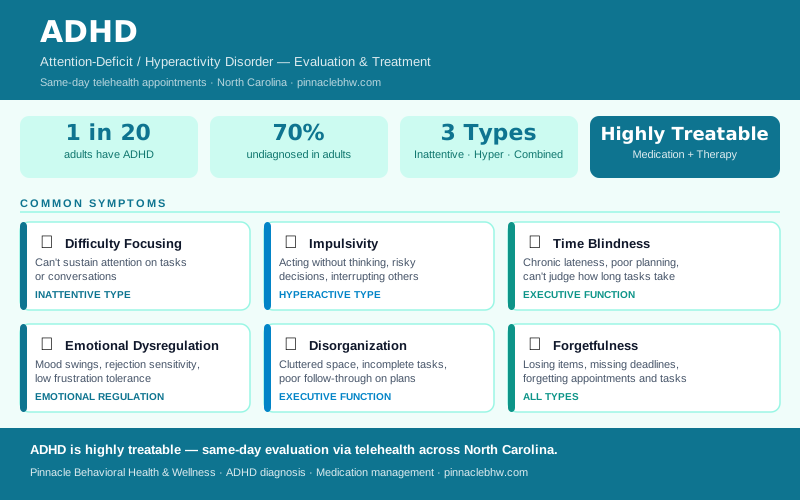
What ADHD Can Look Like
Attention-Deficit/Hyperactivity Disorder (ADHD) is a neurodevelopmental condition that affects how the brain regulates attention, impulse control, and activity level. ADHD is one of the most common mental health conditions in both children and adults.
ADHD is not a lack of intelligence or effort — it reflects differences in brain chemistry and executive function. With proper diagnosis and treatment, people with ADHD can thrive at home, school, and work.
Key Things to Know:
- • ADHD affects approximately 8–10% of children and 4–5% of adults
- • Many adults are diagnosed for the first time as adults
- • ADHD often co-occurs with anxiety, depression, and learning differences
- • Treatment typically includes medication, behavioral strategies, or both
- • Early diagnosis significantly improves outcomes
ADHD Can Affect:
- • Focus and sustained attention
- • Organization and time management
- • Impulse control and decision-making
- • Academic and work performance
- • Relationships and self-esteem
- • Emotional regulation
Attention Challenges
- • Difficulty staying on task
- • Easily distracted
- • Forgetfulness
- • Losing important items
- • Trouble finishing projects
Hyperactivity & Impulsivity
- • Fidgeting or restlessness
- • Talking excessively
- • Interrupting others
- • Acting without thinking
- • Difficulty waiting turns
Executive Function
- • Poor time management
- • Disorganization
- • Procrastination
- • Difficulty prioritizing
- • Emotional dysregulation
ADHD Treatment by City
How ADHD Evaluation Works
Same-day ADHD evaluations available for children and adults across North Carolina.
Living with ADHD: What You Need to Know About Diagnosis and Treatment
DUMMYre often portrays ADHD as hyperactivity in young boys. The clinical reality is much broader. ADHD spans a spectrum of subtypes and severity. It affects adults as often as children. It is frequently underdiagnosed. especially in women, girls, and high-achieving people who compensate for symptoms with intelligence and effort.
In adults, hyperactivity often changes form. Instead of running around, adults describe inner restlessness. They struggle to stay engaged in repetitive tasks. They feel compelled to check their phone or switch activities. Sitting quietly in meetings is difficult. Inattentive symptoms — poor focus, easy distraction, losing track of things, and chronic forgetfulness — often remain strong in adulthood. These symptoms cause real problems in work, relationships, and daily life.
How ADHD Affects Daily Life in Adults
Adults with untreated ADHD often feel a persistent sense of underperformance. They know they are capable of more, but cannot bridge the gap between intention and action. Time blindness is one of the most frustrating features. It means misjudging how long tasks take and failing to manage time well. Common results include missed appointments, late bill payments, and projects abandoned halfway through. The constant stress of feeling behind creates a state of low-level crisis that never fully resolves.
Relationships suffer too. Adults with ADHD may seem distracted or uninterested during conversations. They forget important dates and commitments. They struggle with emotional regulation when frustrated. They feel shame about these patterns even when they genuinely want to change. Years of ADHD-related setbacks often lead to secondary depression and anxiety. Those conditions need to be treated alongside ADHD for care to be fully effective.
ADHD Evaluation at Pinnacle Behavioral Health
Our ADHD evaluation starts with a detailed clinical interview. We review your developmental history, school performance, work life, and current symptoms. We also use standard assessment tools.
When ADHD is diagnosed, we create a treatment plan just for you. Stimulant medications are the most effective option. These include Adderall, Vyvanse, and Concerta. Non-stimulant options are also available.